 |
|||||||||||||||||||||||||||||||||||||||||||||||||||
|
Home 10 DOH Herbs Adelfa Akapulko Ampalaya Balanoi Banaba Bayabas Bawang-Garlic Carrot | Karot Luyang Dilaw Gumamela Lagundi Mabolo Malunggay Makabuhay Niyog-Niyogan Oregano Pandan Pansit-pansitan Sabila Saluyot | Jute Sambong Silymarin Tanglad-Lemon Grass Tsaang Gubat Virgin Coconut Oil Yerba Buena |
Pineapple Nutrition Fact(Ananas comosus) |
||||||||||||||||||||||||||||||||||||||||||||||||||
|
Next to bananas, pineapple is the second most popular tropical
fruit. It is native to South America particularly in Brazil and
Paraguay. Pineapple is also known as Piña, Nanas and Ananas. It was
Christopher Columbus who first introduced the fruit to Europe.
Today, almost a third of the world's production and sixty percent of
canned pineapple comes from Hawaii. |
|||||||||||||||||||||||||||||||||||||||||||||||||||
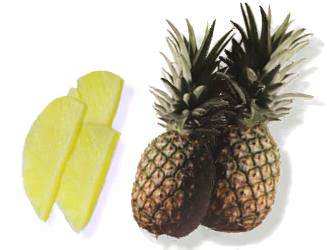 Pineapple Fruit Information
Pineapple Fruit Nutrition FactServing Size: 2-3" diameter, 3/4" slices |
|
|
Calories Calories from fat
%Daily Value Total Fat Saturated Fat Cholesterol 0mg Sodium 2mg Total Carbohydrates 16g Dietary Fiber 2g Sugars 14g Protein 1g Vitamin A Vitamin C Calcium Iron |
60 0
0% 0% 0% 5% 6%
2% 50% 2% 2% |
|
*Based on a 2,000 calorie diet |
|
There are a few ways of propagating the pineapple plant: from seeds
to using the suckers of mother plants that have already borne fruit.
But the common and easiest way is to grow the plant from the crowns
or tops of other pineapples. The crowns are planted in soil to grow
new pineapple plant. It takes about 18 months from planting to
harvesting to produce a ripe pineapple fruit. The pineapple fruit
must be harvested just at the right time, once harvested, it softens
as it ripens but it does not get any sweeter after it has been
picked.
Pineapple Nutrition Fact
The pineapple fruit has vitamins, minerals, fiber and enzymes that is good for the digestive system and helps in maintaining ideal weight and balanced nutrition. Pineapples are a good source of Vitamin C and can be eaten raw or used in cooking. Pineapple has minimal fat and sodium with no-cholesterol. Delicious, healthy and nutritious.
Chemical Composition of Pineapple
|
Ripe & Raw Pineapple |
Per 100g |
Vitamins |
Per 100g |
|
Water Energy Energy Protein Total dietary fiber Lipid Fat Ash Calcium Phosphorus Iron Sodium Potassium Magnesium Copper Manganese Selenium Glucose (Dextrose) Fructose Total sugars |
86 g 49 kcal 205 kj 0.50 g 1.2 g 0.20 g 0.29 g 7 mg 7 mg 0.37 mg 1 mg 113 mg 14 mg 0.11 mg 1.65 mg 0.6 mcg 1.7 g 1.9 g 8 g |
Ascorbic Acid (Vitamin C) Vitamin B-12 Vitamin B-6 Vitamin A, IU Vitamin A, RE/p> Vitamin E Vitamin K Folate (total) Folate, food Folate, DFE Thiamin Riboflavin Niacin Pantothenic acid Tocopherol, alpha
Beta Carotene Alpha Carotene Cryptoxanthin, beta |
15 mg 0 mcg 0.09 mg 50 IU 3 mcg_RE 1.0 mg_ATE 0.7 mcg 11 mcg 11 mcg 11 mcg_DFE 0.09 ug 0.036 mg 0.42 mg 0.16 mg 0.10 mg
31 mcg 0 mcg 0 mcg |
Pineapple Fruit Nutritional Value Based On Preparation
|
Preparation |
Serving Size | Carbs | Fiber | Fat | Energy |
|
Raw Pineapple |
1 slice,110g | "2">9 | "2">2.5g | 0 g | 175 kj |
|
Canned Pineapple, juice drained |
1 cup, 205ml | 25 | 4 g | 0 g | 470 kj |
|
Canned Pineapple in syrup, drained |
1 slice, 40g | 8 | 0.5 g | 0 g | 140 kj |
|
Canned & Crushed Pineapple in juice, drained |
1 cup, 270g | 27 | 4.5 g | 0 g | 510 kj |
|
Canned Pineapple Juice, unsweetened |
250ml |
27 |
0 g |
0 g |
465 kj |
Medicinal Properties of the Pineapple Fruit
Pineapple contains micro-nutrients that experts believe protects against cancer and this micro-nutrients also break up blood clots and is beneficial to the heart. The ripe pineapple has diuretic properties. Pineapple juices also kills intestinal worms. It also relieves intestinal disorders and soothes the bile. Pineapple juice contains chemicals that stimulates the kidneys and aids in removing toxic elements in the body.Pineapple contains a mixture of enzymes called bromelain. Bromelain blocks the production of kinins that form when there is inflammation. Test have shown that this blocking property of Bromelain in pineapple helps reduce swelling brought about by arthritis, gout, sore throat and acute sinusitis. This also helps accelerate the healing of wounds due to injury or surgery. To help reduce inflammation, eat pineapple in between meals. If eaten during or after meals, the enzymes will be utilized for digesting food.
Other Herbal & Non-Herbal Medicine: Philippine Plants, Fruits & Trees
Abaca Plant | Avocado | Atis Fruit | Banana Plant | Barako Coffee | Coconut Palm Tree | Durian Fruit | Guyabano Fruit | Mango Tree | Mangosteen | Papaya Fruit | Pineapple Nutrition Fact | Rubber Tree | Tomato Nutrition Facts | Tuba-Tuba Plant - Jatropha
Key to Nutritional Healing | Philippine Medicinal Plants List
Philippine Herbal Medicine © 2005-2024